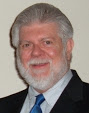
Years ago, when I began growing my beard, I did a survey. When anyone asked or commented about my beard, I would ask them, “When does a man who needs a shave become a man with a beard?” My favorite answer was “the moment a man decides not to shave so that the beard begins to grow, he becomes a man with a beard.” Even if it is the moment before the shaving equipment is put away, whenever the decision is made, he is a man with a beard.
Isn’t it in that moment when we set our intentions to accomplish something that things begin to really happen? I like the question David Allen poses in his book, Getting Things Done, “What is the desired outcome?” Our intentions help us clarify our answer to David’s question.
While intentions are the starting point, they are not enough. Action is what drags them to reality. The results may come slowly. Yet, once we really decide upon our intentions and the action begins, nothing stays the same.
On the other hand, action taken without clear intentions is usually just busy work.
As individuals, we may set our intentions mentally and “just do it.” We get our desired outcomes without spending a lot of time pondering about intentions. When other people are involved, it is not so easy. Even when we think we “all” agree, we usually see some things differently.
During this interim time at Glen Echo Christian Church, the Visioning Committee is charged with leading the congregation in discovering the vision within the hearts of our people in a way that the way forward is clear. Please note: Its task is not to make up a nice vision for the church. Its task is to lead the congregation in discovery.
In September, the Visioning Committee in co-operation with the Elders will be inviting the whole congregation to gather in homes to explore how God is calling us into the future and what we intend to do about that call. That sharing of input by all the people will form the basis for the further work of the Visioning Committee in helping us clarify our vision of the future.
Ultimately, the Committee will have a written report that can be the point of reference for choosing action. More important are the vision and the intentions in the hearts of the people of Glen Echo Christian Church. Please pray for God’s leading as we discover them together.
Tuesday, September 16, 2008


Wednesday, August 06, 2008
Finding our way
“If we do not change direction, we will end up where we are headed.”
Old Chinese Proverb
The proverb is reassuring, IF the direction is toward the desired destination.
The proverb is a dire warning, IF the direction is any other.
So, how do how does a congregation like ours know its desired destination? How does it know that it is on the road that leads to there?
First, recognize that a healthy skepticism helps when anyone talks about what God wants. (See I John 4:1.) It is easy to mistake our self-centered notions for the will of God. It is also easy to talk about God’s call and then try to sell some concept that has nothing to do with God. That mental “bait-and-switch” happens so easily in our minds, doesn’t it? So a good healthy skepticism is in order. However, knowing our destination allows us to begin with our results in mind.
For any congregation, which is serious about following Jesus, the Holy Spirit has already planted the details of its call in the hearts of the people. Discerning that call begins with affirming what is good in the life and witness of the church. It includes recognizing God’s gifts, both spiritual and physical. With that foundation, listening to the vision God has written in the hearts of His people becomes a joyous experience. Listening to both the fears and the dreams opens the entire church to pray for a deeper discernment.
Did you know that a visioning committee is at work at Glen Echo Christian Church to lead such a process? Its task is NOT to plan something more for the church to do. Rather, the task is to engage everyone in discovering God’s purpose. When it is finished, the committee will have a written report. The real value of their work will be in what is evoked from the hearts of the congregation. You will know when the committee has completed its task, because those who read or hear or talk about the vision for the future of Glen Echo Christian Church will respond, “Yes that is what we are about! Let’s do it.”
Tuesday, July 01, 2008
Why go to church?
Why do you go to church? What motivates us to get up on Sunday mornings and attend worship together with other members of our congregation?
If we sat down together and freely discussed our motivation, we would discover a wide diversity of answers that show how God is calling to each of us. As we talked further and more deeply, we would discover that at a deeper level most of us share a common desire to become closer to God. The words we use to express that yearning for God might be different, but we’d be telling about our common humanity.
As we become confident in God’s love and salvation for us, there is a point when we realize that church participation is no longer about winning the approval of God or other people. Nor is it about earning “Extra Points” or greater rewards. So why do we continue to go to church and why is it important?
Bob Davenport shared his answer to that question with me the other evening. With his permission I share it with you. He said, “The reason I go to church is gratitude.”
On the surface, that may seem to be an overly simple answer. However, when you think about it, isn’t thanking God one of the most important things we ever do?
As we gather in worship the thanksgiving we bring has other ripples throughout many lives. Gratitude through worship keeps the spark of our own faith alive. It sets an example that encourages others in their quest for God, and creates a space in which all may grow in serving God through serving others.
When worship is viewed through the lens of gratitude, we no longer ask “What did I get out of this service?” Instead, we ask, “How will my participation honor God as I worship among the Lord’s own people?”
Saturday, May 31, 2008
Unfinished Business
It’s not the things I’ve gone and done I’ll regret or be ashamed,
But the things I did not say or do, because I was afraid.
Carrie Newcomer, folk singer
Unfinished business is anything in a relationship that is not resolved. It can be as simple as hearing that a friend is interested in a hobby that interests us and resolving to talk with them about it when the opportunity occurs. Or it can be as complex the apology that you intended to make that never happened and now is no longer possible for some reason.
I do not remember how I was first introduced to the concept of “unfinished business.” I am grateful for the insight into relationships that the concept has provided through the years. Most of us have quite a lot of unfinished business in our lives. In fact, it is really a normal part of life because we are limited in the amount of time available to us. The only way to avoid it is not to care about anything. I am not willing to pay that price.
Unfinished business becomes a problem when we deny it or fear it or allow it to stress us. The resulting regrets or guilt can leave us stuck and unable to move on. Much unfinished business could be resolved if we gave ourselves permission to say to others, “I have some unfinished business with you.” And then share the common interests or concerns. Our lives would be richer. We’d know more about one another. And celebrate our common interests.
It is more difficult to resolve unfinished business, when the other person is no longer available for us to talk it through with them. There are many reasons why the other may not be available, such unfinished business can be resolved, if we are open to releasing it. Some people are blessed to be able to release this type of unfinished business through prayer and meditation.
Most of us need a trusted friend who can help us talk it through until we find closure.
What unfinished business in your life holds you back from being the person God calls you to be? Are you talking to the people who can help you complete it? Are you praying for God’s guidance in finding closure?
Wednesday, May 07, 2008
Regarding Hospitality
The visitor to the monastery commented on the hospitality received during a week-long stay, “I am so impressed with your hospitality. I could not have been treated more graciously, if I had been Jesus himself.”
“I am delighted that you noticed,” replied the monk, “for you see it is our desire to treat each guest as if that person were, in fact, our Lord. We realize that it is possible that any stranger at our door may really be Jesus. To some extent, Christ is present in every guest.”
The King will reply, 'I tell you the truth, whatever you did for one of the least of these brothers of mine, you did for me.' (Matt 25: 40)
Living into the faith and hospitality of that monastery is never easy. It takes courage to overcome our fear and become hospitable to the stranger at our gate, who might just do us harm, instead of good. Does hospitality demand that we take just any foolish risk that comes along? Probably not! However, many of us hold back in fear of things that do not matter in the long run, when we could reach out a helping hand.
Hospitality requires trust. You and I are not strangers to trust. Our entire civilization is built on trust. Who of us worries that every building in which we live and work is going to collapse? Instead, we trust that the architects and builders have done their jobs properly. We trust the food we eat will be wholesome and nutritious. Could we ever travel by car, if we didn’t trust other drivers to stay on their side of the road?
In his book, Reaching Out, Henri Nouwen describes the journey from hostility to hospitality as one of the three movements of the spiritual life. Hostility is born of fear. Hospitality grows as we learn to trust ourselves and to trust God’s presence.
Learning to entertain the presence of the holy in our lives, challenges us to move beyond our fears and to be open to the possibility of God’s presence in the stranger at the gate. Who knows when that person might be Jesus?
Monday, April 21, 2008
The season for listening
We dare not tarry when God says “March.”
We dare not move forward when God says, “Wait.”
When we are not sure what God is saying, it is a time to listen.
Glen Echo Christian Church is in a season of transition where the task is to listen.
Pastoral transitions always seem to be a crisis, don’t they? Sudden ones are even more troubling. The flood of feelings which we feel may seem overwhelming at times.
It is a season where the task is to listen.
I am told that in the written Chinese language there are two symbols used to express the word crisis: 1. the symbol for danger and 2. the symbol for opportunity. When you think about it, isn’t that a powerful insight!
Who can know for certain the mind of God to see where Glen Echo is being invited in this crisis time? In some moments of the congregation’s grief, we fear the dangers. In other moments, our hearts open to new opportunities that will present themselves. Opportunities, which we might not have seen before, emerge over the horizon.
It is a season to listen.
I am optimistic about the church. It is a human organization filled with confessed and confessing sinners that God somehow is able to use to comfort, challenge, teach and transform us. God’s church really can bring out the best in us as we are called to love and forgive one another. In the church, a crisis is truly an opportunity to discover God’s presence among us.
We are in a season where God is calling us to listen.
I am grateful for the invitation to be with you in this transition time. It is an Interim time, for I will not be a candidate for your becoming your next settled pastor. Together in this season, however, God will place in the hearts of God’s people the seeds for great blessings. We can discover them, if we listen together.
Wednesday, November 21, 2007
Moving when God Calls
The words of the famous hymn by John Fawcett have been running in my head. They speak to me of the blessings that come from our relationships within the church. Fawcett wrote,
Blessed be the tie that binds our hearts in Christian love.
The fellowship of kindred minds is like to that above.
We share each other's woes, each other's burden bear,
and often for each other flows of sympathizing tear.
What a blessing is to share our faith journeys as the church.
I am aware that my service as Interim Pastor at Ankeny Christian Church will soon end. The congregation will move forward under the capable leadership of a new Minister.
John Park and Ruth Winkler will move on to the next assignment.
Our journeys of faith will go on in different directions. Nevertheless, the time and relationships that we shared during this interim will continue to provide nurture and insight to each one of us. We will continue to be part of one another.
Saturday, October 06, 2007
The Empire of Light
" The Empire of Light II" is a famous 1954 painting René Magritte, which shows a street lamp in front of a darkened row of houses. Were it not for the street lamp, the details of the houses behind it would be lost in the darkness. Behind the houses and the trees, however, is a brilliant blue sky with puffy white cumulus clouds. When the fullness of the dawn arrives, the importance of the street light will fade into oblivion.
When I discovered the painting in the Des Moines Art Museum back in 1978, I was struck by the power of the metaphor in describing our relationship to God. There are times when we shine. We give a glow to the neighborhood in which we live and the people around us. That glow pales in the light of God's love for all of us.
Isn't it sad when we allow our yearning to be in control and in charge to blind us to the reality that we all are all in God's hands. He is indeed in charge. It is his world in which we live even when we think we are in the control.
There is a peace that comes when we can celebrate just simply being who we are, without excuse or explanation. Like that street lamp in the painting, God has created each of us for a significant purpose. Discovering that purpose and accepting it is a major step toward the abundant Life Jesus calls us to live. It is limited by our humanity.
Realizing that we are not God and that our lives and our love pales in comparison to His, is another important step. We are not made less significant by acknowledging our relationship to God. Indeed, we become fulfilled when we realize the brilliance of his glory.
Monday, September 17, 2007
Celebrate Life
Life truly is an unfolding tapestry. It is a tapestry woven with the threads of joy and sorrow. Some threads are dark. Sometimes they are so dark you would like to hide them and forget them all together. Other threads are bright with celebration. We like to tell their story.
In the celebration of the beginning of my ministry 40 years ago, I had the privilege of looking back over the tapestry of that time. In that reflecting, I have come to a deeper appreciation for the value of such celebrations of God's gifts to us.
In visiting with a friend who was unable to attend, I commented on the glow that I still felt days after the event. I thanked him for his interest, even though the distance made it impossible for him to be there.
"You should feel a glow." he said, "It's the same kind of experience the Disciples felt after Jesus’ transfiguration. Any big celebration should leave us feeling that way. God's spirit is present. And where God is, there is a glow."
My friend is correct about God's presence in our lives’ unfolding tapestry. I'm flattered by his comparing my 40th anniversary celebration with the transfiguration. I understand the dangers of pushing those parallels very far. The glory of the transfiguration far overshadows my personal experiences. I'm not in that league.
God is present in our celebrations, however.
Could it be that we, in our American culture have lost something important when we dismiss celebrations as a waste of time?
Celebrations are the times in which we meet God, present among our friends. They give us a new perspective on the tapestry of life. Through them, we find meaning and depth that is only possible in the glow, which follows.
Think about the celebrations of your life. Some are celebrations of transitions: weddings, graduations, funerals, arrival of the new baby, baptisms, and major decision points in our lives. Others are seasonal celebrations: Easter, the sparkle of anticipation in the eyes of a four-year-old child on Christmas Eve, Thanksgiving, Memorial Day, even New Year's, and Labor Day.
Do you look for the glow of God's presence in the celebrations of your life? God is present everywhere, the glow will be there. We see the pattern of threads in life’s tapestry from a greater perspective than is possible at any other time.
May the celebrations of your life reveal to you the beauty of the tapestry of life, which is God's gift to you.
Tuesday, August 07, 2007
We can't do ministry by ourselves; we need one another.
Learning the grace to bring out the best in the people around us requires two transitions: 1) from dependence to independence and 2) from independence to interdependence. The Reverend Candice Brown, pastor at Capitol Hill Christian Church in Des Moines, Iowa, recently illustrated how that happens in family and church in her minister’s comments in the church newsletter.
It made me think and pray about my styles of relating to family and church. I certainly can grow in my ability to allow others to work with me cooperatively. How about you?
John Park Winkler
Candice wrote:
"During the first week of my ministry at Capitol Hill, an elder said to me, 'I'll go with you to make calls in the nursing homes and hospitals.' He was trying to help me get acquainted with the area and familiar with the people.
"But what I heard was, 'You aren't capable of doing this yourself. You need my help.'
"So, I responded with words that basically said, 'Thanks, but no thanks; I can handle it myself.'
"My 4-year old granddaughter Elizabeth often says words like that to me when I try to help her change clothes. She says, 'Grandma, I can do it myself!'
"In my years of ministry with you, there have been many times when I was grateful that we share in a joint ministry, that I don't do it by myself.
"The death of my 92-year-old aunt . . . affected my vacation week with my newest granddaughter. It also impacted my participation in the Pentecost Sunday celebration. Out of necessity, I was 'forced' to turn to others for help. It was a very visible way of acknowledging the joint ministry we share. I cannot do it by myself!
"The Worship Committee . . . carried through on the faithful blending of Pentecost worship and Memorial Day remembrance. The Elders provided spiritual leadership for the worship service, utilizing the gifts and graces God has put within them. The Pastoral Relations Committee . . . blessed my time away to be with my extended family to celebrate earthly life and the promise of eternal life.
"[Our] church secretary coordinated all the changes and adjustments that had to be made in the bulletin. And many of you prayed for the gift of new life, . . . for rest and renewal time for me, for my family in the joy of memories and the sadness of loss.
"How dare I think 'I can do it myself!' How dare any of us think that! We can't do ministry by ourselves; we need one another. I thank God this day and every day for you!
"Blessings,"
Candice
Monday, June 25, 2007
Vision
I. Where this is no vision the people perish.
Proverbs 29: 18 (KJV)
II. If people can't see what God is doing, they stumble all over themselves; But when they attend to what he reveals, they are most blessed.
Proverbs 29: 18 (The Message – a paraphrase by Eugene Peterson)
III. There are reports of everyday of at least one suicide bomber who kills innocent bystanders by getting as close to them as possible and setting off explosives strapped to the human body. It makes no sense to us. Could it be that it is difficult for us see and understand life where there is no hope?
IV. Reports from the territory of Gaza suggest that the fighting between Hamas and FATA has made daily normal living impossible. It may be, as some suggest, that in the battle to control the territory, each faction will in fact destroy the emerging nation, before it is even possible for it to exist. What destructive power hopelessness has.
V. A Danish company is marketing a $3 water filter called LifeStraw. "The nine-inch-long straw filters up to 185 gal. of water - about a year's worth of use. . . “(according to Newsweek, June 18, 2007, page 20). Think of the potential life-saving possibilities in those parts of the world where all water is polluted and filled with parasites. Of course, the long-term solution of digging clean wells is important. Yet, being able to drink purified water now, simply by sucking it from a polluted source, can mean the difference between life and death for children and their parents.
++++++++++++++++++++++++++++++++++++++
The future of our planet may depend upon implementing the principle of Proverbs 29: 18 that suggests the importance of having a vision and a purpose in life. It is absolutely true that where there is no vision, the people perish.
Where people see no hope, they are willing not only to destroy themselves, but also those around them.
Yet only a little glimmer of hope can change the world. My first reaction to the story of the Life-Straw was "how many straws can I purchase for the children of sub-Saharan Africa? And where do I send the money?" What about you? Isn't there yearning within each of us to save the lives of children?
That hope comes from of vision of the possibilities created by a $3 filter. That filter is good news for lots of people.
Isn't our task as followers of Jesus bringing hope to people? Sometimes it's a cup of cold water. Sometimes, it's a filter that provides 185 gal. of water. Sometimes it should be helping of person see the possibility of abundant life rather than self-destruction.
What can be more important in sharing the good news than discovering our vision?
Wednesday, June 06, 2007
Feeling Overwhelmed?
Years ago, Dr. Dwight Stevenson, Dean at Lexington Theological Seminary, suggested to the seminary students a very simple solution to the problem of burnout. His solution was paradoxical and counter –intuitive. Nevertheless, it works.
“When you feel overwhelmed and it seems like you will never be able to get out from under the stress,” he said, “begin a brand new activity. make it something that you are interested in and have a passion but for doing and can do for the joy of the activity. Adding it to your schedule, will give you the energy and motivation you need to accomplish the important things that are making you feel overwhelmed.”
Dr. Stevenson’s system really works. What a person adds to their schedule, to make it work will be different for every single one of us. For some it will be making sure that we get a round of golf or a time for fishing built indoor schedule every week. For others it may be computer game time. For still others it may mean reading a book that we have had on our list for a long time.
If you can find an activity for which you have a real passion, it will give you tremendous energy to move beyond a period of stress, get control of your life, and accomplish more than would otherwise be possible.
Friday, May 04, 2007
The Power of Small Beginings
Never doubt that a small group of thoughtful, committed people can change the world. Indeed, it is the only thing that ever has.
-Margaret Mead
-Margaret Mead
Jesus said, "What is God's kingdom like? What can I compare it with? It is like what happens when someone plants a mustard seed in a garden. The seed grows as big as a tree, and birds nest in its branches." Then Jesus said, "What can I compare God's kingdom with? It is like what happens when a woman mixes yeast into three batches of flour. Finally, all the dough rises." - Luke 13: 18-21 (CEV)
In the next few days, the Long-Range Planning Committee will be completing its vision report for Ankeny Christian Church. The members of the committee will tell you that it has been a long, difficult challenge to produce the report.
I am excited to see the report take shape. I believe that the committee has done a tremendous job of listening to how God is speaking to Ankeny Christian Church through her people. The report lifts that vision for all to see.
When it is presented, some may wonder why something so simple to so long to produce. Others may doubt that the effort has been worthwhile. Frankly, whether or not it makes a difference depends upon whether a few people see and understand the vision, then commit to making it the reality.
Margaret Mead is completely right. It only takes a few committed people to transform the world.
It is a principle of nature. God built it into the universe Jesus knew it well. Tiny seeds create big trees. Tiny eggs create beautiful birds. The faith the size of a mustard seed can move mountains. A tiny bit of leaven lifts the entire loaf of bread.
In fact, Jesus uses the principle of leaven and the loaf to teach us about God's realm.
What is the seed that God has planted within your heart? Are you providing it the soil and moisture that it needs to grow to its full potential?
Wednesday, April 18, 2007
Worhip Takes Preparation
Every worship service in our church is an event. If it is truly worship there will be an encounter between God and the people present. That encounter may inspire and motivate, anger and infuriate, challenge and confront, or lead to a life changing transformation. If we have truly encountered the Living God, we may feel very good about the experience, or we may not. It depends upon our response to the call of God's presence.
It is possible to attend a worship service and not personally have an encounter with God. It is possible that only one or two people will be touched by God's presence in a significant way, on any given Sunday. The measure of the significance of a worship service is not that it made us feel good, or that it was entertaining. If during a worship service, we totally withdraw into ourselves we miss an important part of worship.
When we come to participate in public worship: We can either “spend” our time in Worship, or we can “invest” our time in Worship. Time “spent” in worship is gone forever. Time “invested” pays dividends of enduring value.
Spending time is passive. Investing time will transform our lives and the lives of the others around us. Spending time in Worship is to come just hoping that something will be important to us. Investing time in Worship means coming prepared to learn and to give. Investing time makes Worship a participation sport.
The most powerful worship experiences occur when the participants create an environment of praise, celebration, meditation, and personal decision. That environment gives God glory. It touches our hearts. It links us with the saints of the church throughout the centuries. It lifts us in the presence of the Living God. We know that something important has happened. We know God is with us.
For some in Ankeny Christian Church, this kind of vibrant worship happens frequently. For others, it is less common. A few never experience it, at all.
Here are some suggestions to make Worship an investment:
1. Prepare. Read Scripture text. Write the check for your offering. Think about what you can do to encourage those who will be around you to see God. Think about the needs in your life. Is God at the top of your list of needs? What kind of person have you been since the last time you worshiped? Come to worship prepared to give and to learn.
2. Participate. Sing the songs. (or at least open the book and look at the words.) Try the new songs. (OK, some really are pretty bad, but many are wonderfully good. Most grow on you.) Take notes. You'll learn more from the sermon. If you feel moved, say an “Amen”. Listen for God's call. Feel his Spirit moving among his people. Rejoice in being there. Expect a blessing.
3. Open up to God. Open the door to your heart for Him. Resolve to change the things that you can change. Accept those things you cannot change, and turn them over to Him. Look for doors He has opened for you.
Saturday, March 03, 2007
Personal Change
Are you personally willing to make the changes in your behavior and in your life that will lead Ankeny Christian Church to the next level of its growth and maturity?
Before you answer that question, some prayerful and thoughtful meditation and reflection are in order. It is easy to say, "I'd like to see our church grow in its witness and service to Jesus Christ." It is quite another thing to make a commitment to personal change that will have an impact on the future of our congregation.
Making Ankeny Christian Church the church God calls it to become is not the task of the Minister, the Steering Committee, any committee or group. it is indeed up you and me, as individuals. God has given every single one of us insight in to the mission and purpose of our congregation.
Do you feel free to share your insight? Are you listening to others and inviting them to tell you about their vision? Do you celebrate the things you have in common? Do the possibilities that grow out of the differences excite you? Do you know the passions of the people who worship in the pews next to you? What are you doing to encourage them to use those passions for the glory of God through our church?
Do you have a sense of sharing together as a team? Do others see you as being a helpful teammate? While you and I, as individuals, are responsible for shaping the future of our church, God calls us to celebrate our unity in Him. Together we shall serve Him.
God is moving in the have the life of Ankeny Christian Church. Do you hear it? Do you see it? Can you feel it?
We are not yet the church we can be. That church is different. It will emerge as you and I yield to God’s leading. When we see it, we will not be the same as we are today.
Are you personally willing to make the changes in your behavior and in your life that will lead Ankeny Christian Church to the next level of its growth and maturity?
Thursday, February 15, 2007
Thinking Big
“I tell you the truth, if you have faith as small as a mustard seed, you can say to this mountain, 'Move from here to there' and it will move. Nothing will be impossible for you." Matt 17:20 NIV
Why is it so difficult to think big?
Most of us think too small and dream too little. Big ideas and plans frighten us. That is why so many people settle for being so much less than they could be and accomplish far less than they could achieve.
Goethe echoed Jesus’ truth about faith in these words: “Concerning acts of initiative and creation, there is one elementary truth – that the moment one definitely commits oneself, then providence moves, too.”
It is just about as easy to accomplish a huge goal as to accomplish a puny one. But the feeling of achievement and the energy that the huge goal brings far outweighs that of a puny goal.
I invite you to think big
Tuesday, January 02, 2007
Telling our personal stories
"We've a story to tell to the nations
That shall turn their hearts to the right,
A story of truth and mercy,
A story of peace and light.
For the darkness shall turn to dawning,
and the dawning to noonday bright,
And Christ’s great kingdom shall come on earth,
The kingdom of love and light."
H. Ernest Nichol, 1896
It is no wonder that Jesus taught in parables (stories).
Stories share life.
Stories can be retold by people not involved in the events, without losing the details of the action. Even when the people who retell the story do not fully understand its meaning, their retelling of the events can convey the meaning to their hearers.
We of Ankeny Christian Church DO have a story to share with the world. It is the story of God's love, revealed in Jesus Christ. It is a story of hope. It is a story of the power of life, when lived in harmony with God. It is that story that gives meaning to our very existence, as a congregation of the church.
Telling the story of our church is the best way to help our friends and neighbors discover how God has worked within the fellowship that we share.
As individuals, each one of us has a story to tell. It is the story of a journey. It is a story of our failings and our mistakes. It is a story of victories. It is a story of possibilities that have been fulfilled. It is a story of dreams. It is a story that is specific to you. It is a story that is specific to me.
Telling our personal stories is the best witness for God’s leading in our lives that we can make. Before we can tell those stories, however, it helps to think about how to express them.
I find it helps me to write it out. That is not the only way, but for me writing out helps me to be much more concise. I find two perspectives helpful in getting in touch with my story. First, I think of my story as a spiritual autobiography. It is the story of almost 63 years of my lifelong faith journey. In a spiritual autobiography, the story of the key moments of decision and faithfulness emerge. Second, I think of my story as a two-minute witness to my faith, a version that could be shared briefly with someone I had just met.
I also find it helps to take a broad view of my entire life. Years ago, I was introduced to a survey form developed by Dr. James Fowler, entitled, “The Unfolding Tapestry of Your Life." It is like a timeline, beginning at birth, and continuing to my current age. It helps me think about what was happening in my world, what was going on around the world, and my understanding of God that phase of my life. Each time I use the survey tool, I find that memories flood back to me. They bring new meaning to things that happened long ago, which I had never thought about again. The feelings of those events flood back as well. Some are happy feelings. Some are feelings of guilt, regret and embarrassment. Some cause me to laugh. Others fill my eyes with tears. Yet, they are my story.
As we begin the New Year, I invite you take time to get back in touch with your own personal story in a new and fresh way. Use the timeline to help you think about your journey. Write it out. Then, lets talk.
Wednesday, December 13, 2006
Leaving Legacies
I did not know until recently that the founder of the "Reading is Fundamental" (RIF) program was Margaret McNamara. She had a passion for promoting reading among children. She knew the value that comes to children when they read a book that they personally own. The RIF program had a modest start in 1966. Today it is helping Children read, all over the country. In its quiet way, the legacy ofMargaret McNamara dwarfs the more visible contributions to the world of her husband Robert S. McNamara, who was secretary of defense in the Kennedy and Johnson administrations. There are prominent leaders across our nation who told the story of owning their first RIF book and that changes it made in their outlook and in their lives.
The legacy of Andrew Carnegie it is more well known. The prominent steel industry tycoon also had a passion for books and libraries and the communities of America. Any observant trip across our country will discover Carnegie libraries in small towns and larger communities. Adjusted for inflation, Carnegie's fortune was every bit as large as the Bill Gates fortune. His legacy of community interest and improving the world is far more valuable than the number of dollars involved. Carnegie had a passion for helping people be the very best that they could be. His ideas and management concepts have truly shaped the modern world.
Nicholas, Bishop of Mira, has left an even bigger legacy. Nicholas lived in the fourth century of the common era. He was known for his generosity. When he was recognized as a saint of the church, it was his generosity that was to become the stuff of legends. Nicholas, saint of hopeless causes, is recognized on December 6th every year, but his legend has become linked with the giving of the Christmas season. Perhaps you think more of St. Nicholas under the modern twists of his name as Santa n'Klaus, or Santa Claus. His is a legend that inspires generosity beyond our greatest imaginations.
Again and again throughout life, I have heard it said that it is very important that we leave the world a better place that we found it. I guess that's what it means to leave a legacy.
I have come to appreciate the legacies, both big and small, that had meaning to the lives of the nations of our planet. The legacies that you and I leave behind a not last the nearly 1700 years of Nicholas of Mira. They may not last the century that has passed since Carnegie built his libraries. They may not last the decades since Margaret McNamara began making books available to children. It is however important that you and I share the gifts God has given us in ways that leave legacy's behind.
May we ponder our gifts and resolve in our hearts that the world will be a better place because we were here.
Thursday, November 09, 2006
Jesus Connection - December 2, 2006
On Saturday, December 2 our building will be the site for a Seminar on the “Jesus Connection.”
The Long Range Planning Committee is very excited to have the meeting here in our facility. We would like to have anyone from our church who are interested in thinking “outside the Box” about our future to attend.
If you are in the Sunday School Class is studying the book, “The Jesus Connection,” you have a rare chance to actually hear and visit with the author of the book, in our building!
Led by Jan Linn and David Digby, the workshop will introduce participants to an understanding of the church in the 21st Century that does not “settle” for Business-as-usual, but points to a deeper understanding of what it means to be Jesus’ Disciples in our time.
Both Jan and David are applying the concepts in their congregations, so it is not untested theory. You and the leaders you bring will come away with at least one solid perspective that will be worth the registration fee.
For more than 30 years, Jan Linn has been involved in building bridges between faith and action. A native of Virginia, early in his ministry he saw the disconnect between faith and racial and economic justice, faith and peace making, faith and respect for diversity in all its many forms. As both a college and seminary teacher, as well as a congregational pastor and activist, he has taught and preached a commitment to Christian discipleship that stands against judgmentalism, exclusivism, and moral superiority.
Since 1998 Jan has been serving as co-pastor of Spirit of Joy Christian Church, Lakeville, Minnesota, with his wife, Joy. This is a new church start that is seeking to be innovative and creative in its approach to high commitment membership in the tradition of the Church of The Savior in Washington, D.C.
To register and see more information, check out the website.
http://www.thejesusconnection.com/
Tuesday, October 10, 2006
Who are your heroes?
When Chapman University presented its annual Albert Schweitzer award during the orientation for parents and new students this fall, I had to wonder how Chapman University felt so connected with Dr. Schweitzer. I found out. The leadership of the University has simply chosen to honor the life and witness of this extraordinary man in order to encourage its students to look to Dr. Schweitzer as a role model for a sincere Christian life.
I remembered comments from the home meetings and Ankeny Christian Church.
"We are called to be role models for one another and for the world," we said.
For Christian people, the real role model must always be Jesus. Yet, one of the realities of our world is that most people discover Jesus through seeing people around them who live for Him. Often it is not the Bible, or sermons from the pulpit, or lessons in the Sunday School class, which lead people to see Jesus' face to face. It is instead the parent, the friend, or the neighbor who puts into practice a true Discipleship of Jesus who becomes the memorable role model.
You and I may be the only Bible that is read by some of the people around us. We may be, for good or ill, the example of some people see as what it means to be a follower of Jesus. How we live our lives may be the factor that leads to our friends and neighbors to Christ.
It is not accident that many motivational writers suggest that if you want to succeed in a project of some kind, the first place to start is to find someone who has already succeeded with a similar project, and copy what they did. It removes a lot of trial and error, mistakes and false starts.
I think the Chapman University has a wonderful idea to encourage its students to look at to a person like Albert Schweitzer as a role model for how life should be lived. Can you think of a more powerful message to students?
Do you think Ankeny Christian Church would benefit from such a focus of pointing our members and friends to a worthy role model? I think so. Who should we pick, in addition to Jesus Christ? Perhaps we should pick one of the great saints of the past century. Perhaps we should seek to focus upon some of the Saints within the life of our own congregation.
Certainly, every one of us is called to live in such a way that that role model could be us. What things in our lives would you and I need to change in order to be worthy of such an honor?
Subscribe to:
Posts (Atom)
